Stepping away from the ancient, twisting medina of Fes to embark on Fes to Marrakech desert tours is an experience that transcends mere travel; it is a voyage through the very soul of the Maghreb. This iconic route carries you from the spiritual heart of the kingdom, through the cedar forests of the Middle Atlas, and deep into the silent, shifting golden dunes of the Sahara before finally arriving at the vibrant "Red City" of Marrakech. As we navigate through 2026, Morocco has refined its tourism offerings to cater to a new generation of travelers seeking both authenticity and sustainability. Recent data from Google News highlights that Morocco’s "Light in Action" tourism roadmap is successfully attracting millions of visitors, with a particular focus on digital innovation and community-driven experiences in the desert regions. For the modern adventurer, this means that Fes to Marrakech desert tours are now more seamless and culturally rich than ever before.
To understand the geographical majesty of this trip, one must first grasp the technical reality of the terrain. The Sahara is the world's largest hot desert, an expanse so vast it covers approximately 31% of the African continent. According to Wikipedia, the Sahara is not just a sea of sand, it is a complex landscape of "hamada" (rocky plateaus), "ergs" (sand seas), and "wadis" (dry valleys). On a journey from Fes to Marrakech, you will witness these diverse geological features firsthand, moving from the Mediterranean-influenced north across the formidable barrier of the Atlas Mountains, which create a rain shadow that preserves the desert’s hyper-arid beauty.
The Northern Passage: From Fes Through the Middle Atlas Mountains
The first leg of Fes to Marrakech desert tours is a striking study in contrasts. As you depart Fes, the labyrinthine city walls give way to the rolling hills of the Middle Atlas. One of the first stops is usually Ifrane, often referred to as the "Switzerland of Morocco." Built during the French Protectorate era, its alpine architecture and tidy parks offer a surprising European aesthetic in the heart of North Africa. However, the real natural wonder lies just beyond in the ancient cedar forests of Azrou. These woods are the primary habitat for the Barbary macaque, a rare primate species. Watching these monkeys navigate the towering trees provides an immediate connection to the region's biodiversity.
As the journey continues southward, the green forests transition into the stark, volcanic landscapes of Midelt. This town serves as the commercial hub for the surrounding apple-growing plateau and acts as the geographical midpoint between the mountains and the desert. Professional travel analysts at Forbes often suggest that these remote stops are where the most authentic cultural exchanges happen, as local markets remain focused on community needs rather than tourist souvenirs. The drive then descends into the Ziz Valley, a breathtaking canyon where millions of date palms form a lush green ribbon against the orange-red limestone cliffs, signaling your arrival at the edge of the Sahara.
Into the Erg Chebbi: The Sahara Desert Experience
The most anticipated segment of Fes to Marrakech desert tours is reaching the village of Merzouga, the gateway to the Erg Chebbi dunes. These dunes are among the most famous in the world, with some peaks reaching heights of over 150 meters. The experience of the desert is a sensory one; the sand is so fine it feels like silk, and the silence is so absolute it feels physical. Most tours involve a camel trek at sunset, a rhythmic and peaceful mode of travel that has remained unchanged for thousands of years. As the sun dips below the horizon, the dunes transform from a brilliant gold to deep violets and ochres.
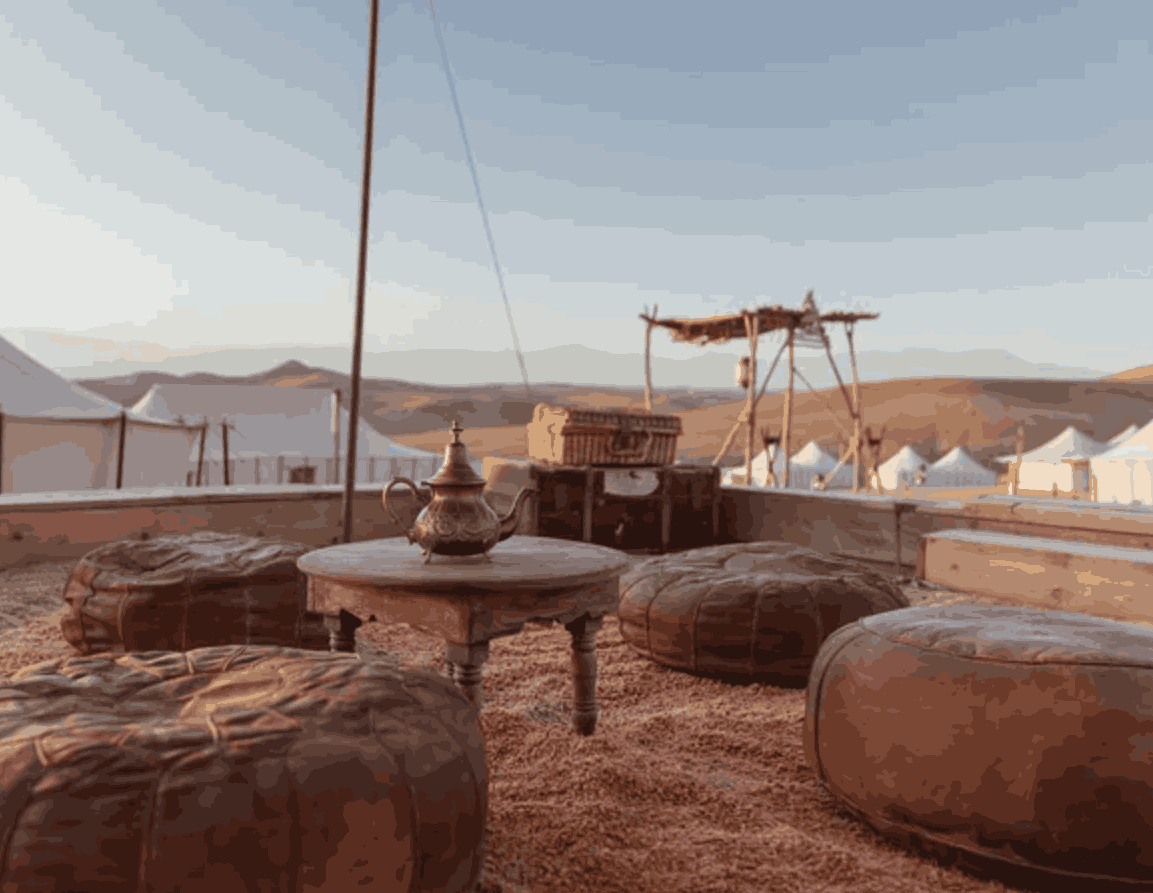
In 2026, the desert camp experience has evolved into a highlight of global luxury travel. Whether you choose a traditional Berber tent or a modern glamping setup, the night in the Sahara is unforgettable. Because the desert is far from urban light pollution, the stargazing is world-class. Many camps now incorporate traditional Gnaoua music performances around the campfire, where the rhythmic drumming and chanting tell the history of the trans-Saharan trade. Rising early the next morning to watch the sunrise over the Algerian border is a ritual that reminds every traveler of the earth's raw, quiet power.
The Southern Route: Canyons, Kasbahs, and the High Atlas
After departing the dunes, Fes to Marrakech desert tours head westward toward the Dades Valley and the Todra Gorge. The Todra Gorge is a massive limestone canyon where the walls rise 300 meters high, leaving only a narrow path for the river and travelers below. It is a favorite spot for rock climbers and hikers, offering cool shade even in the height of the day. The "Road of a Thousand Kasbahs" then leads you through the Valley of the Roses, famous for its Damascus roses and the annual festival that celebrates the harvest in May.
The final major historical landmark before reaching Marrakech is the Ksar of Ait Ben Haddou. This UNESCO World Heritage site is a stunning example of southern Moroccan architecture, with its fortified earthen buildings rising dramatically from the valley floor. It has served as a backdrop for countless films and television series, but its true value lies in its history as a vital stop for caravans carrying salt and gold. The journey concludes with the crossing of the Tizi n'Tichka pass in the High Atlas Mountains. Reaching 2,260 meters, this winding road provides panoramic views of the plains below, marking your final descent into the bustling, colorful energy of Marrakech.
Conclusion and Final Advice for the Modern Traveler
Planning Fes to Marrakech desert tours requires a blend of curiosity and preparation. While the landscapes are undeniably beautiful, the driving hours are significant, making it essential to choose a tour that prioritizes comfort and local expertise. In 2026, travelers are encouraged to look for operators who support local Berber communities and practice eco-friendly waste management in their desert camps. Always remember to pack layers; the desert can be scorching during the day and surprisingly cold at night, even in the summer months.
The journey from the spiritual capital of Fes to the imperial splendor of Marrakech via the Sahara is more than just a road trip; it is a masterclass in geography, history, and human resilience. It is a path that has been traveled by scholars, merchants, and nomads for millennia, and today, it remains the definitive Moroccan experience.