The freedom of the open road is a sensation that few experiences can match, yet that liberation comes with a significant responsibility to protect yourself, your machine, and others. For many riders, the primary question before ever twisting the throttle is a practical one regarding the financial commitment required for protection. If you have ever wondered how much is motorcycle insurance, you are certainly not alone in your curiosity. As we navigate through 2026, the landscape of motorcycle premiums continues to shift, influenced by evolving safety technology, regional traffic patterns, and the rising costs of vehicle repairs.
In general, the average cost for motorcycle insurance in the United States currently ranges from $500 to $1,500 per year for a full coverage policy. If you break that down into a monthly budget, most riders are looking at an expense between $40 and $125 per month. However, these figures are merely starting points. Your actual premium could be as low as $15 per month for basic liability in a rural state or as high as $300 per month for a high performance sport bike in a major metropolitan area. Understanding the nuances of these costs is essential for any rider looking to balance comprehensive protection with financial efficiency.
Key Factors That Determine Your Motorcycle Insurance Premiums
Insurance companies do not pull numbers out of thin air when deciding what to charge you for a policy. Instead, they use complex algorithms to assess the statistical likelihood that you will file a claim. By understanding these variables, you can gain better control over your expenses and perhaps even make lifestyle or equipment choices that lower your rates.
The Influence of Your Age and Riding Experience
One of the most significant predictors of risk is the age and experience level of the rider. Statistically, younger riders are more likely to be involved in accidents due to a combination of high energy and a lack of road experience. For instance, an 18 year old rider may face premiums that are 200% higher than those for a 40 year old on the exact same motorcycle. As you age, your rates typically decrease until you reach your 70s, provided you maintain a clean record.
Experience is just as vital as age. A 40 year old who just received their motorcycle endorsement may still pay more than a 30 year old who has been riding for a decade. Insurers view a long history of safe riding as a sign of lower risk, which translates directly into lower annual costs.
The Impact of Your Motorcycle Type
The machine you choose to ride is perhaps the most direct influencer of your premium. Not all motorcycles are created equal in the eyes of an actuary. Cruisers and standard motorcycles often enjoy the lowest rates because they are built for steady riding rather than high speed maneuvers. On the other hand, sport bikes often carry much higher premiums because they are faster, more expensive to repair after a slide, and are statistically more likely to be stolen.
Touring bikes, which are often large and expensive, also command higher premiums because of their high replacement value. If you are riding a high end touring model with advanced electronics and premium luggage systems, your insurance company knows that even a minor tip over could result in thousands of dollars in repairs.
Location and Regional Driving Conditions
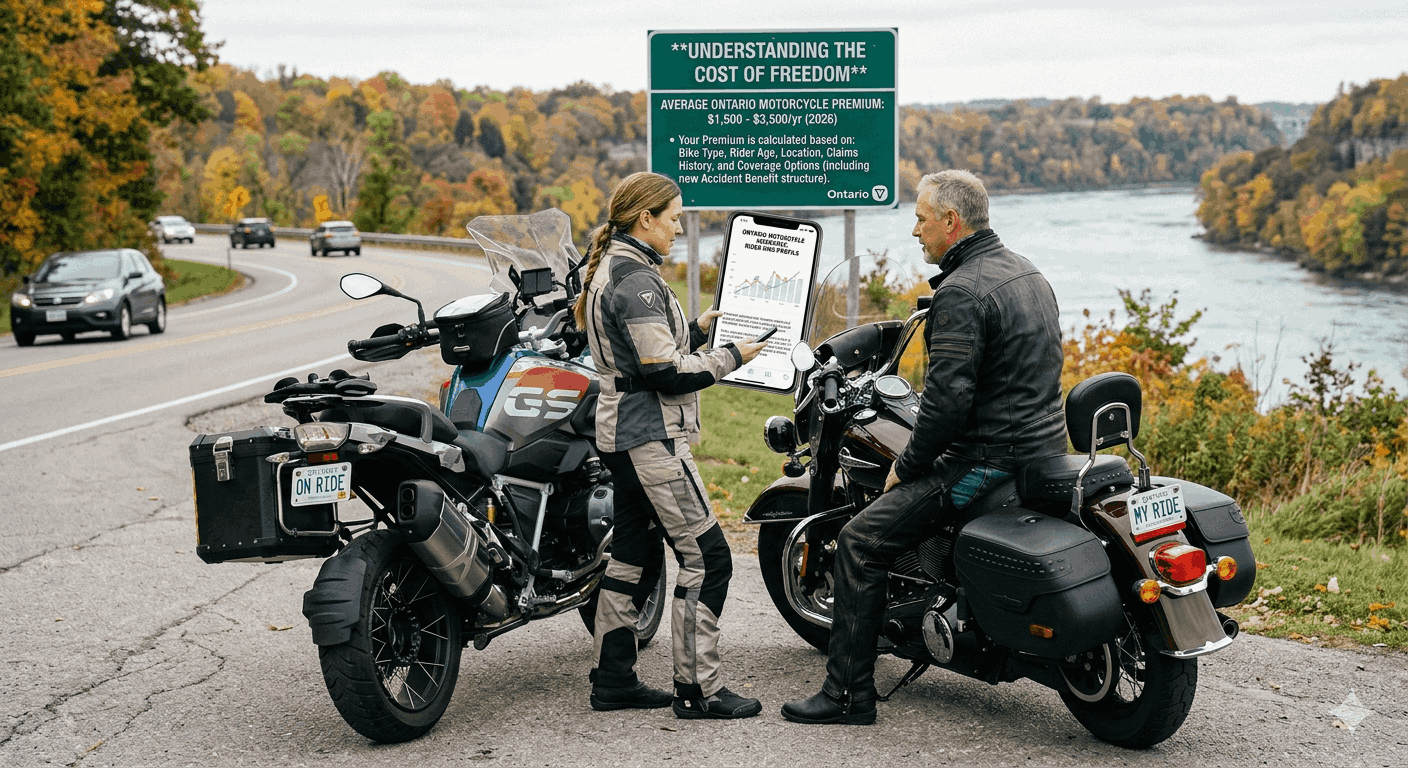
Where you live plays a massive role in how much is motorcycle insurance for you. If you reside in a state with a short riding season, such as Iowa or North Dakota, your rates will likely be much lower because the bike is parked for several months of the year. Conversely, states like Florida, California, and Texas have year round riding weather, which naturally leads to more time on the road and a higher probability of accidents.
Furthermore, urban environments are significantly more expensive than rural ones. Cities have higher traffic density, more intersections, and higher rates of vehicle theft. If you park your bike on a street in a busy city, you will almost certainly pay more than someone who keeps their bike in a locked garage in a quiet suburb.
Understanding Different Types of Coverage and Their Costs
When you are looking at quotes, the price will vary drastically depending on the level of protection you choose. It is tempting to go for the cheapest option available, but it is important to understand what you are actually buying and what you are leaving unprotected.
Liability Only Coverage
This is the bare minimum required by law in most states. Liability insurance covers the costs of injuries or property damage you cause to others in an accident. It does not cover your bike or your medical bills. Because the risk to the insurer is limited, this is the most affordable way to ride legally. In some low cost states, liability only coverage can be found for as little as $150 to $300 per year.
Collision and Comprehensive Coverage
If you want the insurance company to pay for repairs to your own bike, you need collision coverage. This kicks in if you hit another vehicle or a stationary object. Comprehensive coverage protects you against things that are out of your control, such as theft, fire, or damage from a falling tree limb. These additions significantly increase your premium but are usually required if you are financing your motorcycle.
Uninsured and Underinsured Motorist Protection
This is a critical coverage that many riders overlook. Statistically, a high number of motorists on the road carry either no insurance or the bare minimum. If a car hits you and the driver has no insurance, you could be left with massive medical bills and a totaled bike. Adding this protection usually costs a modest amount but provides an essential safety net for your personal health and financial stability.
Effective Strategies to Lower Your Motorcycle Insurance Rates
While many factors like your age or location are difficult to change, there are several proactive steps you can take to make your motorcycle insurance more affordable. Implementing even a few of these strategies can result in hundreds of dollars in savings annually.
Take a Certified Safety Course
Most insurance providers offer a discount of 5% to 15% if you complete a recognized safety course, such as those offered by the Motorcycle Safety Foundation. These courses teach defensive riding techniques that significantly reduce your risk of an accident. For a new rider, the discount can often pay for the cost of the course within the first year of ownership.
Bundle Your Insurance Policies
If you already have car insurance, homeowners insurance, or renters insurance, check with your current provider first. Most companies offer a multi policy discount for bundling. By keeping all your insurance under one roof, you simplify your billing and often receive a substantial discount across all your policies.
Increase Your Deductible
The deductible is the amount you pay out of pocket before the insurance company covers the rest of a claim. By choosing a higher deductible, you are taking on more of the financial risk yourself, which prompts the insurance company to lower your premium. If you have enough savings to cover a $1,000 deductible in the event of an accident, you can save a significant amount on your monthly payments compared to a $250 or $500 deductible.
Secure Your Motorcycle
Theft is a major concern for insurers. If you can prove that your bike is stored in a locked garage and equipped with anti theft devices like a GPS tracker or a high quality disc lock, you may qualify for a discount. Some insurers even offer lower rates if your motorcycle has an anti lock braking system (ABS), as this technology is proven to reduce the severity of collisions.
Conclusion and Final Thoughts on Riding Protected
As you have discovered, the answer to how much is motorcycle insurance is influenced by a diverse set of factors ranging from the power of your engine to the safety of your zip code. While the average cost of around $700 per year is a helpful benchmark, your personal journey and choices will ultimately define your final rate. Whether you are a seasoned veteran or a newcomer to the two wheeled world, taking the time to research and compare quotes is the best way to ensure you are getting the most value for your money.